In 2023, the U.S. Surgeon General did something unusual. He declared loneliness a national epidemic. Not a personal failing or a lifestyle choice, but a public health crisis on par with smoking, obesity, and substance abuse. The advisory noted that chronic loneliness carries health risks equivalent to smoking fifteen cigarettes a day.
Two years later, the numbers have not improved. One in five employees worldwide reports feeling lonely on any given day, according to Gallup’s most recent workplace data. Among fully remote workers, that figure climbs to one in four. The research is consistent and mounting: the more time people spend working alone, the more isolated they feel, even when they are technically more connected than any generation in history.
We are not telling you this to be grim. We are telling you this because it is the problem WuWei Village was designed to address. Not as a wellness product or a retreat offering, but as a structural answer to a structural problem.
The Remote Work Paradox
Remote work gave a generation of knowledge workers something genuinely valuable: freedom. The freedom to work from anywhere, to design their own schedules, to escape the daily commute and the open-plan office. Many people, ourselves included, would not trade it back.
But freedom and belonging are not the same thing. And for millions of people, the laptop on the kitchen table has come to represent both: the ability to work from anywhere, and the creeping realization that nowhere quite feels like home.
The opposite of loneliness isn’t having more people around you. It’s feeling that you matter to the people around you.
That insight, from researcher Dr. Zach Mercurio, cuts to the heart of why conventional solutions to remote work loneliness tend to fall short. Virtual coffee chats and Slack channels do not create the sense of mattering that comes from genuine community. They simulate connection without producing it.
What San Marcos Taught Us
Thirty years ago, San Marcos La Laguna, the village just across the lake from Tzununá, was a tienda and a church. Then, slowly and then rapidly, it became something else: a hub for the conscious travel community, attracting healers, artists, and seekers from around the world.
The energy was real. The community was real. And then something happened that happens to every place that grows without a plan: the infrastructure couldn’t keep up. Roads deteriorated. Sanitation suffered. The character that made San Marcos magnetic became diluted by the volume of people drawn to it. The community that had formed organically began to fracture under the weight of unmanaged growth.
It is a cautionary tale that every intentional community builder knows, or should know. Organic community is precious. It is also fragile. Without a master plan, without governance, without deliberate design, growth destroys the very thing that made a place worth growing into.
WuWei Village was designed with this lesson embedded into its structure. The master plan, the phased development, the values-aligned shareholder model, the five-year hold. None of these are bureaucratic formalities. They are the mechanisms that protect the culture from the forces that erode it.
What Community Actually Looks Like Here
At WuWei, community is not an amenity. It is the architecture.
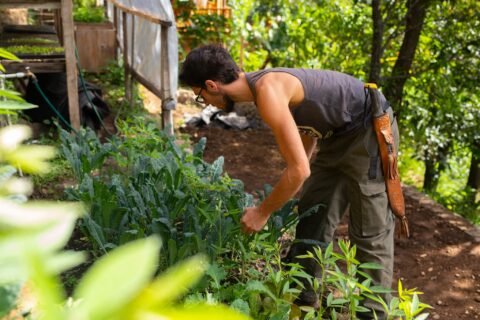
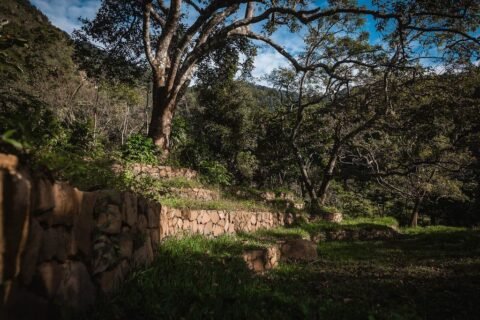
The shala, the communal kitchen, the outdoor gathering spaces, and the Maker’s Space are not incidental features. They are placed deliberately at the heart of the village so that daily life naturally produces encounter. You walk past the kitchen on the way to your front door. You hear music from the shala. Your children play with your neighbors’ children on the same terraces where the food forest is growing.
Shared meals, seasonal celebrations, collaborative work days, morning practices. These are not programmed events bolted onto a residential development. They are the rhythm of village life, and they emerge from a physical environment that was designed to make them possible.
For families considering where their children will grow up, this matters enormously. For remote workers who have traded the office for the kitchen table, it offers something a co-working space cannot: not just a place to work, but a reason to belong.
The Investor Dimension
We think it is worth saying directly: the loneliness epidemic is not just a social problem. It is an economic signal.
Millions of people, particularly in the 35 to 55 demographic, particularly those with professional incomes and location flexibility, are quietly searching for what WuWei Village offers. They are not searching for a retreat. They are searching for a place. A place with roots, with culture, with people who know their names, with children running across terraces in the afternoon.
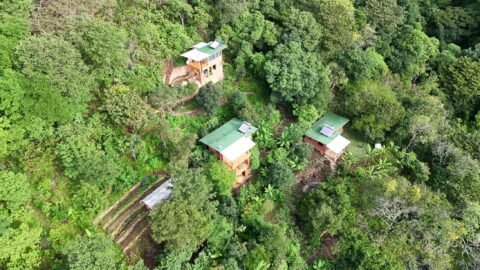
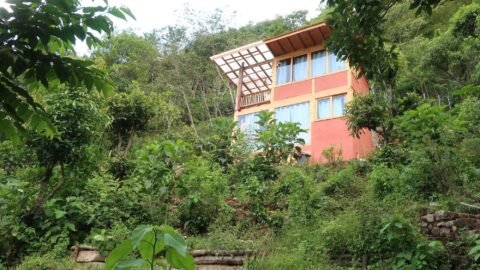
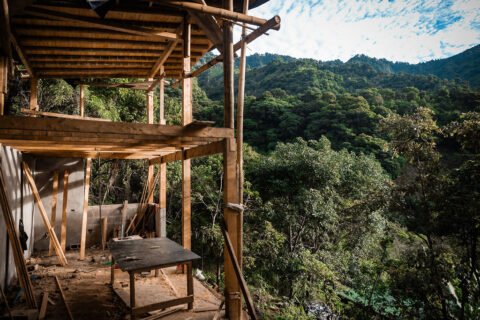
That demand is real, growing, and dramatically undersupplied. There is no other project at Lake Atitlán that offers what WuWei is building: a fully designed, values-governed, regenerative village with a long-term residential pathway and a track record of actual construction.
Investing in WuWei is, among other things, investing in the answer to a problem that is only getting bigger.
A Final Note
We started WuWei Village because we believed that how we live together matters as much as where we live. That belief has not changed. If anything, five years of building and five years of watching the world get lonelier has made us more certain of it.
The village we are building is not a cure for loneliness. It is something more modest and more durable: a way of living that makes loneliness structurally harder, day by day, season by season, for the people who choose to be part of it.
If this resonates with how you want to spend your time and your capital, Phase 2 is open now. Reach out at wuwei.%76%69%6c%6cage@%67%6dai%6c%2ecom. No pitch, just a real conversation about fit.